When investors talk about “risk”, they often quote volatility or show a line of annual returns. But what most people feel in real life is maximum drawdown – the largest peak‑to‑trough fall a portfolio has suffered over a given period.
In simple terms, maximum drawdown measures the worst drop from a fund’s highest value to its lowest point before it makes a new high. It tells you the maximum “pain” an investor would have had to sit through without selling.
Maximum drawdown is a powerful indicator because it combines the size of the loss with how hard that loss would be to live through. Two funds may have similar long‑term returns, but if one has a much deeper maximum drawdown, most investors will find it harder to stay invested in that strategy when markets turn rough.
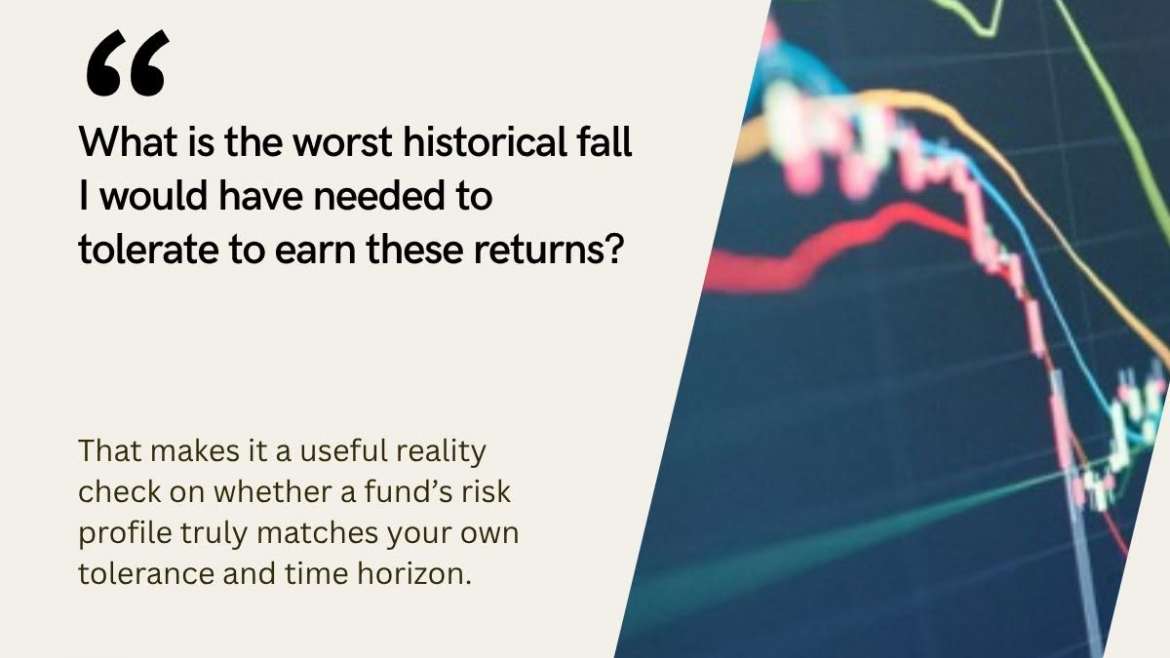
Looking at maximum drawdown helps answer a very practical question: “What is the worst historical fall I would have needed to tolerate to earn these returns?” That makes it a useful reality check on whether a fund’s risk profile truly matches your own tolerance and time horizon.
At Aggregate Asset Management, a key part of portfolio design is not just aiming for attractive long‑term returns, but doing so with drawdowns that a typical long‑term investor can realistically live with.
For many of our clients at Aggregate, understanding this number upfront makes it easier to stay disciplined when markets get noisy.